
"coffee cupping China"
10000 article(s) found

Exploding the three factions of Chinese cafes
At present, China's per capita coffee consumption is 5 cups per year, which is far lower than that of Japan and South Korea, with an average of about 300 cups per person per year. However, coffee consumption in China continues to grow at an annual rate of 15% to 20%, making it the world's most potential coffee consumer. In the current Chinese market, there are three forces active in China, Europe and the United States, and they are using

Blue Book of Coffee consumption in China: take-out has become a new trend in buying coffee
Professional coffee knowledge exchange more coffee bean information please follow the coffee workshop (Wechat official account cafe_style) Guide at present, the domestic coffee market is in a stage of rapid development, the number of consumers is also growing rapidly. According to the forward-looking Industrial Research Institute, China's coffee consumption market was about 70 billion yuan in 2015, accounting for about 0.5% of the global market. And Chinese coffee.

Cancel the cash deal to beat Starbucks! China Little Blue Cup Luckin Coffee's unique business classics!
Professional coffee knowledge exchange more coffee bean information please follow the coffee workshop (Wechat official account cafe_style) China small Blue Cup Coffee unique business to send friends coffee, you can also get a cup, log in to App for the first time, a free cup, a cup of dark blue Lu Shou coffee, recently popular in Chinese commercial buildings, almost replaced the original Starbucks in the Chinese market
A Survey of Coffee in China Catimor Coffee cultivation introduces why there is no boutique coffee in China
For more information on coffee beans, please follow the coffee workshop (Wechat official account cafe_style) an overview of Chinese coffee-Arabica (mainly Catimor) and some Robusta flavors-difficult to classify because it varies from region to region and a large part of it is sold as instant coffee. Under ideal conditions, coffee beans appear clean and medium.

Starbucks' success in China is not only coffee but also sentiment.
Since entering China in 1999, Starbucks has set off an upsurge of drinking coffee. Wherever the trend goes, Starbucks is strong, from Beijing, Tianjin, Shanghai, Chengdu, Guangzhou, Wuhan all the way to Zhengzhou. In the words of Shi Dongwei, vice president of public affairs at Starbucks Greater China, Starbucks successfully boosted the coffee market in China, where tea culture prevails.

Starbucks' success in China is not only coffee but also sentiment.
Since entering China in 1999, Starbucks has set off an upsurge of drinking coffee. Wherever the trend goes, Starbucks is strong, from Beijing, Tianjin, Shanghai, Chengdu, Guangzhou, Wuhan all the way to Zhengzhou. In the words of Shi Dongwei, vice president of public affairs at Starbucks Greater China, Starbucks successfully boosted the coffee market in China, where tea culture prevails.
Nestle wants to "add weight" to China's coffee market development
Recently, Nestlé (NESN.VX), the world's largest food company, has made frequent expansion actions in China. In addition to continuously acquiring domestic enterprises, it has also directly increased its main business segments including coffee, in order to rapidly increase the proportion of its business in China. Nestle Greater China President Di Kewei told China Securities News on the 22nd that China has become the world's second largest economy and represents the Chinese market

Starbucks' success in China is not only coffee but also sentiment.
Since entering China in 1999, Starbucks has set off an upsurge of drinking coffee. Wherever the trend goes, Starbucks is strong, from Beijing, Tianjin, Shanghai, Chengdu, Guangzhou, Wuhan all the way to Zhengzhou. In the words of Shi Dongwei, vice president of public affairs at Starbucks Greater China, Starbucks successfully boosted the coffee market in China, where tea culture prevails.

Starbucks' success in China is not only coffee but also sentiment.
Since entering China in 1999, Starbucks has set off an upsurge of drinking coffee. Wherever the trend goes, Starbucks is strong, from Beijing, Tianjin, Shanghai, Chengdu, Guangzhou, Wuhan all the way to Zhengzhou. In the words of Shi Dongwei, vice president of public affairs at Starbucks Greater China, Starbucks successfully boosted the coffee market in China, where tea culture prevails.

Operational advantages of coin-operated automatic coffee machine
Operational advantages: 1, 24-hour unattended, can be completely uncontrolled, automatic selling, automatic coin collection, automatic identification of counterfeit coins, automatic cup drop, automatic counting, automatic timing switch and simple maintenance. 2. It can sell coffee series, various milk tea series, milk, Hot Chocolate Milk and all kinds of fruit juice drinks automatically. 3. It is simple and convenient for consumers to operate, saving manpower and time.

Prospect of Coffee Market in China
First, with the deepening of China's reform and opening up, the popularity of coffee culture in China started relatively late, and it was not well known by the Chinese people before the 1990s. However, since the 1990s, with the deepening of China's reform and opening up and the continuous infiltration of western culture, coffee, the vanguard of western culture, has gradually entered the lives of the people. Now, with the economic downturn,
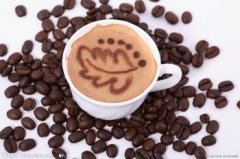
Why use bone china cups to drink hot coffee?
Why use bone china cups to drink hot coffee? The cups made of bone porcelain, which are better than those made of porcelain, can slow down the temperature of coffee in the cup by using this kind of bone porcelain cups containing animal ashes. However, because its price is much more expensive than the former two, it is rarely used by ordinary families and can only be found in more exquisite cafes. Why the price of bone porcelain cup is higher than that of pottery and porcelain

China: is there coffee in the culture?
Coffee has entered the life of Chinese people. In China, people like to drink coffee more and more. Coffee culture, like Chinese tea art, has a long history. Each country has its own unique coffee culture, some pay attention to the quality and taste of coffee, some pay attention to the environment and atmosphere of drinking coffee, and some pay more attention to the etiquette and procedure of drinking coffee. Whether at home or in the office

Coffee wings are warm and integrated into China Internet Conference, and the whole city wing starts to drink coffee.
From July 11 to 13, 2017, under the guidance of the Ministry of Industry and Information Technology and the State Internet Information Office, the 2017 (16th) China Internet Conference sponsored by the Internet Society of China was held at the National Convention Center in Beijing. The conference focuses on artificial intelligence, intelligent manufacturing, sharing economy, information consumption, industrial Internet and Internet health care with the theme of widely connecting new vitality and industry.

The Southwest Division of the 2017 China barista skills Competition has begun.
For the exchange of professional baristas, please follow the Coffee Workshop (Wechat official account cafe_style) China barista skills Competition, which is a domestic coffee industry professional competition sponsored by the Coffee Bean Branch of China Fruit Circulation Association under the guidance of the Circulation Industry Promotion Center of the Ministry of Commerce and strongly supported by Tianfu Commodity Exchange. 2017 Zhongjia match Southwest Division is raised by Chengdu Coffee and Western Food Association.
The first South China Coffee Cup Test Competition was held in Guangzhou at the end of June in 2014.
The 2014 South China Coffee Cup Test Competition was held in Guangzhou at the end of June. We are looking for sponsors and look forward to your participation.

The success of Starbucks in China is not only coffee but also sentiment.
Since entering China in 1999, Starbucks has set off an upsurge of drinking coffee. Wherever the trend goes, Starbucks is strong, from Beijing, Tianjin, Shanghai, Chengdu, Guangzhou, Wuhan all the way to Zhengzhou. In the words of Shi Dongwei, vice president of public affairs at Starbucks Greater China, Starbucks successfully boosted the coffee market in China, where tea culture prevails.

Du Jianning, the first world coffee champion in mainland China, won the 2019 World Coffee Brewing Competition.
Professional coffee knowledge exchange more coffee bean information please follow the coffee workshop (Wechat official account cafe_style) every year, the coffee industry ushered in a major event, that is, the World Coffee Association (WorldCoffeeEvents, hereinafter referred to as WCE) organized by the World Barista Competition (WorldBaristaChampionship, hereinafter referred to as WBC), which also includes World Coffee

The final of the 2016 World Coffee Cup Test Competition in China starts in Yangcheng in December.
Shanghai, July 10, 2015 / PRNewswire-Asianet /-- Coffee cup testing is not only a professional skill, a profession, but also a pleasure. What is a good cup of coffee? It needs to use professional evaluation methods to evaluate the quality of coffee. The significance of cup test is to evaluate and compare several different kinds of coffee at the same level. Because the difference between coffee is very subtle.
When was coffee introduced into the history of Chinese cultural development?
As China becomes richer, coffee culture is springing up in the land of tea drinkers. Coffee consumption is growing at an astonishing 15% a year, compared with the global average of 2%, according to the London-based International Coffee Organization. This partly stems from the reality that China's starting point is relatively low. The average Chinese drink only three cups of coffee a year, compared with 500 to 7 percent for Americans.